


Walt Disney and Javier Bardem never met, yet their names now sit together in film history. Bardem joined Disney’s biggest franchises decades after the founder passed away. This guide explains that connection honestly.
You will learn who each man was, which Disney films Bardem starred in, how audiences responded, and why his performances fit the studio’s long storytelling tradition.
Quick Bio Walt Disney and Javier Bardem
| Detail | Walt Disney | Javier Bardem |
|---|---|---|
| Full Name | Walter Elias Disney | Javier Ángel Encinas Bardem |
| Date of Birth | 5 December 1901 | 1 March 1969 |
| Birthplace | Chicago, Illinois, USA | Las Palmas de Gran Canaria, Spain |
| Status | Died 15 December 1966 in Burbank, California | Alive and active in film |
| Nationality | American | Spanish |
| Profession | Animator, producer, and entrepreneur | Actor and film producer |
| Breakthrough | Mickey Mouse and Steamboat Willie (1928) | Jamón Jamón (1992) |
| Biggest Achievement | Snow White and the Seven Dwarfs (1937) | Oscar for No Country for Old Men |
| Academy Awards | 22 competitive wins, 26 including honorary awards | 1 win and 4 nominations in total |
| Spouse | Lillian Bounds (married in 1925) | Penélope Cruz (married in 2010) |
| Children | Two daughters, Diane and Sharon | Two children |
| Famous Family | Brother and business partner Roy O. Disney | Mother Pilar Bardem and uncle Juan Antonio Bardem |
| Disney Role | Founder of the Disney studio and Disneyland (1955) | Captain Salazar (2017) and King Triton (2023) |
| Languages | English | Spanish and English |
| Connection | Never met Bardem, since he died in 1966 | Joined Disney films decades after Walt’s death |
Who Was Walt Disney and What Did He Build
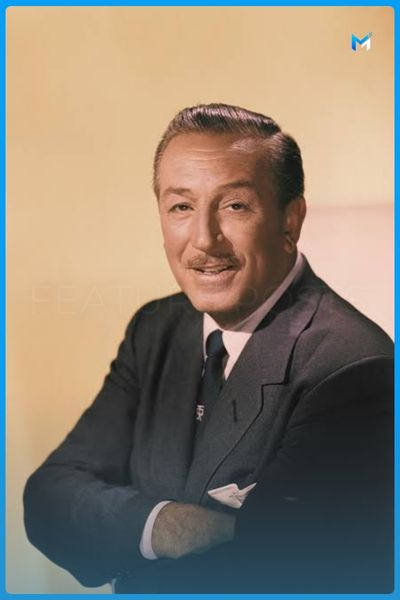
Walt Disney was born in Chicago on December 5, 1901, and he grew up with a deep love for drawing and storytelling. He started a small animation studio with his brother Roy in 1923, and the partnership slowly grew into a global entertainment company. Walt introduced Mickey Mouse in 1928, and audiences fell in love with the cheerful character almost immediately. He then took a huge risk by producing Snow White and the Seven Dwarfs in 1937, the first full-length cel animated feature in American film history. That bold decision proved that animation could carry an emotional story across a full feature film and win real critical respect.
Walt opened Disneyland in Anaheim, California, in 1955, and the park changed how families spend their leisure time. He insisted on quality, so his artists studied movement, music, and color with unusual care. Those high standards became the foundation of the Disney brand that audiences still trust. Walt died on December 15, 1966, but the company he built kept growing through films, theme parks, and television. Disney later acquired Pixar, Marvel, and Lucasfilm, which expanded its reach far beyond hand-drawn cartoons. Today the studio hires some of the world’s most respected actors, and that modern casting approach is exactly how Javier Bardem eventually entered the Disney story.
Explore More Mary Barra and David Cordani: Net Worth, Careers, and Leadership Compared
Who Is Javier Bardem and Why Hollywood Respects Him
Javier Bardem was born on March 1, 1969, in Las Palmas de Gran Canaria, Spain, into a famous acting family. His mother, Pilar Bardem, and his uncle, Juan Antonio Bardem, both shaped Spanish cinema. Javier first gained attention in Spanish films such as Jamón Jamón in 1992, and he soon built a reputation for fearless, physical performances. His intense screen presence made directors across Europe and America want him for demanding roles. He crossed into English-language cinema with Before Night Falls, which earned him his first Oscar nomination. You can read a full career overview on Javier Bardem’s Wikipedia page if you want every credit in one place.
Bardem won the Academy Award for Best Supporting Actor for playing Anton Chigurh in No Country for Old Men, becoming the first Spanish actor to win an Oscar. He later earned nominations for Biutiful and Being the Ricardos. He also played the villain Silva in Skyfall and Stilgar in the Dune films, which showed his range across genres. Few actors match his mix of menace and warmth on screen. Critics admire him because he commits fully to every character, whether the role is tender, comic, or terrifying. That reputation made him an attractive choice for Disney, since the studio needed actors who could make fantasy characters feel real.
Did Walt Disney Ever Meet Javier Bardem
The short answer is no. Walt Disney died in December 1966, and Javier Bardem was born in March 1969, so the two men never shared a room, a set, or a conversation. Their lives never overlapped in any meaningful professional or personal way. Any claim that Walt personally cast or guided Bardem is simply false. Many websites blur this point to attract clicks, but honest reporting matters. The real connection exists at the company level. Walt founded the studio, and decades later its executives chose Bardem for major franchise roles. Understanding this timeline helps fans separate Hollywood myth from verifiable fact and appreciate the true story more.
So where does the magic come from? It comes from legacy. Every Disney film today carries the founder’s name and the standards he set, and Bardem’s roles became part of that continuing story. That continuity explains why fans often link the two names. When Bardem stepped onto a Disney set, he joined a tradition that began with Mickey Mouse and now includes pirate adventures and live-action fairy tales. Fans enjoy imagining a meeting between the two, but the better story is the studio’s evolution. Walt built the house, and later artists such as Bardem filled its rooms with unforgettable characters that new generations now love and quote.
Javier Bardem Joins Pirates of the Caribbean as Captain Salazar
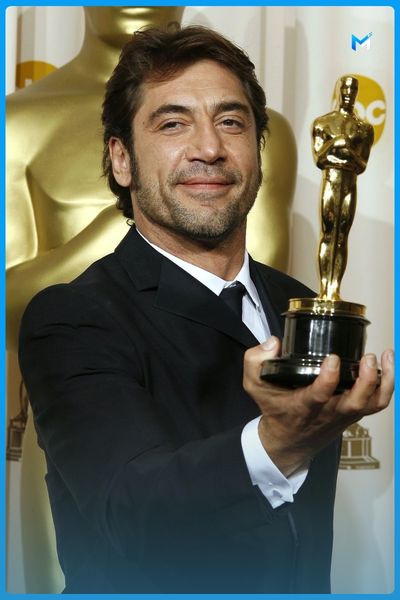
Disney announced Javier Bardem as the main villain of Pirates of the Caribbean: Dead Men Tell No Tales, released in 2017. He played Captain Armando Salazar, a ruthless and relentless Spanish naval officer who hunts pirates across the sea. Directors Joachim Rønning and Espen Sandberg wanted a menacing opponent for Johnny Depp’s Jack Sparrow, and Bardem delivered that threat with calm, frightening ease. The franchise had already seen several villains, yet Salazar felt personal because his rage came from a specific betrayal. Bardem’s casting also gave the film new prestige, since an Academy Award winner rarely plays a vengeful ghost with floating hair and a damaged body.
Salazar’s backstory gave Bardem plenty of rich material to work with. In the story, young Jack Sparrow tricked the captain into the Devil’s Triangle, where Salazar and his crew died and became trapped as ghosts. Bardem played him with cold patience, a soft Spanish accent, and sudden, explosive bursts of fury. The visual effects team gave him a wavering, underwater look, and the actor still sold every scene through his eyes and voice. He also gave the villain a sense of dignity, which made audiences understand his anger. That balance turned a computer-enhanced ghost into one of the more memorable antagonists of the later Pirates of the Caribbean films.
How Bardem Brought Fear and Depth to a Disney Villain
Bardem approached Salazar like a serious, layered dramatic role instead of a cartoon monster. He focused on the captain’s grief, pride, and fierce sense of justice, because strong villains believe they are right. That method echoes his work as Anton Chigurh, where calm menace frightened viewers more than loud threats. In Dead Men Tell No Tales, Bardem lets silence do much of the work, and a slow, unblinking stare often feels scarier than a sword fight. His physical control also matters. He moves with stiff military precision, which makes the ghostly captain feel dangerous even when the effects team surrounds him with heavy smoke and decay.
Depth also came from the way Bardem treated the villain’s relationship with Jack Sparrow. Salazar does not hate Jack for sport. He hates him because Jack ruined his life and his crew’s future. That clear motive gives the film emotional weight and lets the comedy around Johnny Depp feel sharper by contrast. The role also demanded heavy costume work and constant coordination with visual effects artists. Because he never mocks the material, audiences stay invested. Many reviewers praised his menace even when they criticized the plot. The result shows how a serious actor can strengthen a family adventure without losing its sense of fun or spectacle.
Javier Bardem Becomes King Triton in The Little Mermaid
Disney surprised fans when it cast Javier Bardem as King Triton in the 2023 live-action remake of The Little Mermaid. Rob Marshall directed the film, and Halle Bailey starred as Ariel. Triton is a very different character from Salazar, because he is a protective father and a powerful ruler of the sea. Triton rules Atlantica with authority, but fear for his daughter drives his choices. Bardem had to show strength, anger, and love within the same scene. His casting proved that Disney trusts him with both villains and heroic figures. The role also let Bardem work with elaborate spectacle and a younger co-star, which offered a new challenge after years of intense dramatic parts.
Bardem’s Triton keeps the core of the animated classic but adds a more emotional layer. He lets the king’s anger come from fear, which makes his strict rules toward Ariel easier to understand. Some viewers wanted more screen time for him, and others praised his commanding presence and warm, steady voice. The film earned solid box office results worldwide, and Bardem’s participation gave it extra credibility and star power among adult audiences. Fans of the original 1989 cartoon often compare the two Tritons, yet Bardem’s version stands on its own. He plays a father trying to protect his child, and that universal feeling connects the film across generations.
Behind the Scenes of Bardem’s Disney Performances
Both Disney projects demanded heavy technical and creative preparation. On Dead Men Tell No Tales, Bardem worked inside a production that mixed practical sets, large pirate ships, and extensive visual effects. His ghostly look required digital artists to animate drifting hair and missing pieces of his body. Actors in such big productions must imagine effects that appear only months later, and Bardem handled that challenge with steady discipline. The shoot took place largely in Australia, where crews built massive, detailed sets and staged elaborate, demanding sea sequences. Bardem’s approach suited the job, since a believable villain needs a performer who treats every imaginary detail as completely real.
The Little Mermaid brought a different set of challenges. Much of the film takes place underwater, so the production used wire rigs, special camera systems, and digital effects to create the illusion of swimming. Actors had to move with slow, graceful control while delivering emotional dialogue. Bardem’s Triton wears a long beard and carries a golden trident, and those details demanded careful coordination between costume, effects, and performance. Director Rob Marshall, known for musical films like Chicago, shaped the movement and rhythm of each scene. Bardem adapted to this new style and kept his performance steady, powerful, and clear, even when the technology around him grew complex.
How Fans and Critics Reacted to Bardem’s Disney Roles
Reactions to Bardem’s Disney work were generally positive, even when reviewers disagreed about the films themselves. Dead Men Tell No Tales received mixed reviews, yet many critics highlighted Bardem’s menace as one of its strongest elements. The film also earned close to $800 million worldwide, which kept the franchise commercially healthy. Audiences enjoyed seeing a serious actor take on a supernatural pirate villain, and many fans welcomed his intensity. For many viewers, Salazar felt like a return to the fear that made the early Pirates movies exciting. That response suggests Bardem understood what fans wanted, namely a threatening foe with real, human emotion and lasting style.
The Little Mermaid drew a more divided response overall, since fans compared it closely with the 1989 animated film. Even so, Bardem’s Triton stayed one of the cast members that viewers discussed positively. Some praised how he gave the king a softer emotional core, while others wanted deeper material for him. The film earned roughly $570 million at the global box office, which showed strong audience interest. Bardem’s role mattered because Triton anchors Ariel’s emotional journey. When the father and daughter share a scene, the film’s central conflict becomes clear. Those moments gave Bardem a chance to show gentleness, a quality that many viewers did not expect from him.
Why Javier Bardem Fits the Disney Legacy
Disney storytelling has always depended on memorable characters, and Bardem’s performances follow that principle. Salazar and Triton are two very different figures, yet each carries clear, believable motives, visible emotion, and strong, magnetic screen presence. Disney’s best villains and parents have always felt larger than life while remaining human, and Bardem understands that balance. He never treats a Disney role as simple decoration or easy spectacle. Instead, he treats the material seriously and gives audiences a character they can fear, pity, or admire. That approach mirrors the founder’s insistence on quality, because every small performance choice supports the larger story the studio wants to tell audiences.
The connection between Walt Disney and Javier Bardem is therefore symbolic, not personal. Walt created a studio that welcomed new talent across generations, and Bardem represents the modern era of that tradition. His work shows that Disney now blends animation heritage with global acting stars. Fans who enjoy these links can rewatch both films and notice how each performance reflects the studio’s long tradition. The story also reminds us that legacy grows through collaboration. Walt supplied the vision, studio artists built the worlds, and actors such as Bardem brought those worlds to life. Together, their legacies form a magical connection that no timeline can erase, even though the two men never met.
Read More Ray Dalio and Patricia Poppe: Who They Are and Why They Matter
Conclusion
Walt Disney and Javier Bardem never met, but their stories connect through the studio Walt built. Bardem’s roles as Captain Salazar and King Triton show how Disney welcomes serious, world-class actors.
Fans can enjoy this connection best by watching both films and appreciating the craft behind each performance. The legacy stays alive because new artists keep adding fresh characters to Disney’s world.
Frequently Asked Questions
Did Walt Disney ever meet Javier Bardem?
No. Walt died in 1966, three years before Bardem was born.
Which Disney movies has Javier Bardem starred in?
He starred in Pirates of the Caribbean: Dead Men Tell No Tales and The Little Mermaid.
Who did Javier Bardem play in Pirates of the Caribbean?
He played Captain Armando Salazar, the ghostly Spanish villain.
Who did Javier Bardem play in The Little Mermaid?
He played King Triton, Ariel’s father and ruler of the sea.
Has Javier Bardem won an Oscar?
Yes. He won Best Supporting Actor for No Country for Old Men.
Stay More Update MINTECH