

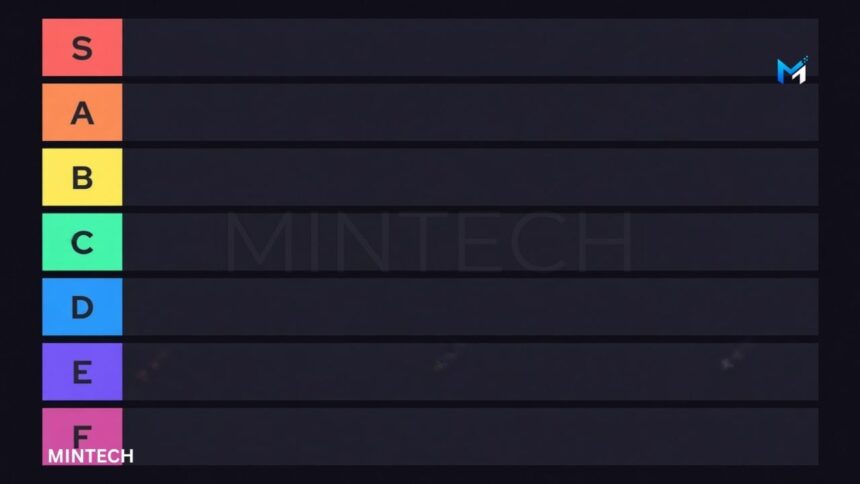
A tier list is a ranking system that organizes items, people, characters, products, skills, or choices into different levels of quality, usefulness, or preference. Instead of placing everything in a simple first-to-last order, a tier list groups similar options together. The most common format uses labels such as S-Tier, A-Tier, B-Tier, C-Tier, D-Tier, and F-Tier. Each tier represents a general level of performance or value.
Tier lists have become especially popular across gaming, sports, entertainment, technology, food, and online communities. They make comparisons easy to understand because users can quickly see which options someone considers excellent, average, or weak. However, a tier list does not always represent an objective truth. Personal preferences, experience, criteria, and context can all influence where something appears. Understanding these factors helps explain why different people can create completely different rankings from the same group of options.
Quick Guide to Tier Lists
| Category | Details |
|---|---|
| Term | Tier List |
| Basic Meaning | A system for grouping and ranking items by quality or performance |
| Most Common Ranking | S-Tier through F-Tier |
| Highest Tier | S-Tier |
| Common Top Rank | A-Tier |
| Middle Ranks | B-Tier and C-Tier |
| Lower Ranks | D-Tier and F-Tier |
| Popular Use | Gaming, entertainment, sports, products, and online communities |
| Ranking Type | Usually comparative |
| Evaluation Style | Objective, subjective, or mixed |
| Main Purpose | Making comparisons easier |
What Is a Tier List?
A tier list is a visual ranking system that places different choices into categories called tiers. Each tier represents a particular level of quality, effectiveness, popularity, or personal preference. Unlike a traditional ranking that gives every item one exact position, a tier list can place several items at the same level. For example, five video game characters might all appear in S-Tier if the creator considers them equally strong or valuable.
The concept works because categories make large comparisons easier to understand. Someone looking at a tier list can immediately identify the strongest group and then move down through the lower categories. The meaning of each tier depends on the subject and the creator’s criteria. One person might rank restaurants according to taste, while another might consider price, service, and atmosphere. As a result, the same subject can produce several valid tier lists with different results.
How Does a Tier List Work?
A tier list usually begins with a collection of items that need comparison. The creator then decides which factors matter and establishes categories based on those factors. In a gaming tier list, the creator might consider character strength, abilities, matchups, and competitive performance. In a movie tier list, the criteria could include storytelling, acting, cultural impact, entertainment value, and personal enjoyment.
After establishing the criteria, the creator places each item into an appropriate tier. Some lists use five categories, while others use more. The creator can also explain why particular choices received their positions. This explanation is important because simply placing something in S-Tier does not tell readers exactly why it earned that position. Clear criteria make a tier list easier to understand, compare, and debate.
Understanding S-Tier, A-Tier, B-Tier, and Lower Ranks
S-Tier generally represents the highest level on a tier list. The letter “S” is commonly associated with an exceptional or superior category, particularly in gaming and internet ranking culture. A-Tier usually follows S-Tier and represents options that remain excellent but may have some limitations. B-Tier often describes solid or above-average choices, while C-Tier commonly represents average or middle-ground options.
D-Tier and F-Tier usually appear near the bottom of a traditional tier system. They can represent weaker, less effective, disappointing, or undesirable choices. However, these labels do not have universal definitions. A creator can decide that C-Tier means average, while another may use it for something slightly above average. Therefore, readers should understand the creator’s criteria before interpreting the exact meaning of each category.
Explore More Unique Article: Tate James Rytky
Why Are Tier Lists So Popular?
Tier lists became especially popular because they turn complicated comparisons into simple visual formats. Instead of reading a long explanation about every option, viewers can scan a list and immediately see how everything compares. This format works particularly well online because users can quickly understand the overall opinion and then discuss individual placements.
Another reason for their popularity is that tier lists naturally encourage conversation. People often agree with some placements while strongly disagreeing with others. That disagreement creates opportunities for comments, debates, videos, social posts, and community discussions. A tier list can therefore become more than a ranking. It can become a way for people with shared interests to explain their opinions and compare their experiences.
Where Are Tier Lists Commonly Used?
Gaming is one of the most recognizable areas for tier lists. Players frequently rank characters, weapons, abilities, maps, games, teams, or strategies. Competitive gaming communities often use tier lists to discuss which options perform best within a particular game version or competitive environment. Because games change through updates and balance patches, these rankings can also change over time.
Outside gaming, people use tier lists for almost anything that can be compared. Fans can rank movies, television shows, music albums, fictional characters, sports players, foods, celebrities, travel destinations, or technology products. Businesses and creators can also use ranking formats to explain options to audiences. The flexibility of the format is one reason the term “tier list” has become widely understood across internet culture.
How to Create a Tier List
Creating a useful tier list starts with defining the subject and purpose. First, choose what you want to rank and collect all relevant options. Next, determine the criteria that will influence your decisions. If you are ranking smartphones, for example, you might consider performance, camera quality, battery life, software, durability, and price. Clearly defined criteria help prevent random placements.
After setting the criteria, create your tiers and begin comparing the options. Avoid changing your standards for individual items simply because you prefer one choice. If the list represents personal preference, say so clearly. If you want a more objective ranking, use measurable information whenever possible. You can also review the finished list and check whether the placements remain consistent with your original criteria.
What Makes a Good Tier List?
A good tier list has a clear purpose, consistent criteria, and understandable categories. Readers should know what the creator is measuring before they judge the rankings. A strong list also explains unusual placements instead of relying entirely on unexplained opinions. This makes the ranking more useful because readers can understand the reasoning behind each decision.
Good tier lists also recognize context. Something may perform extremely well in one situation but poorly in another. For example, a video game character might dominate in one game mode but struggle in another. Similarly, an affordable product might rank highly for value but lower for premium features. Adding context prevents a simple ranking from creating misleading conclusions.
Tier Lists vs Traditional Rankings
Traditional rankings usually assign each option a specific numerical or sequential position. If ten items are being ranked, the system might place one at number one, another at number two, and so on. This method creates a precise order, but small differences can sometimes appear more significant than they really are. A tier list solves this issue by allowing several items to share a category.
The two systems can serve different purposes. A traditional ranking works well when precise ordering matters, especially when measurable scores determine the outcome. A tier list works well when several options have similar strengths or when the evaluation includes subjective judgment. Neither method is automatically better. The right format depends on what the creator wants the audience to understand.
Common Mistakes When Making a Tier List
One common mistake is creating categories without defining what they mean. If a creator places items into S-Tier, A-Tier, and B-Tier without explaining the standards, readers may interpret the categories differently. Another mistake involves inconsistent criteria. For example, ranking one item based on price while judging another mainly on performance can make the final list difficult to defend.
Another problem occurs when creators confuse popularity with quality. A widely popular item is not automatically the strongest choice for every purpose. Personal bias can also influence rankings, especially when the subject involves entertainment or fandom. A better approach is to acknowledge personal preferences and explain the criteria clearly. This does not eliminate disagreement, but it makes the ranking more transparent.
Are Tier Lists Objective or Subjective?
A tier list can be objective, subjective, or a mixture of both. An objective-style list relies on measurable information such as statistics, test results, sales figures, scores, or performance data. Even then, the creator must decide which measurements matter. That decision can introduce some subjectivity into the overall ranking.
Subjective tier lists depend more heavily on personal experience and preference. This approach is common when people rank movies, music, foods, characters, or other entertainment topics. A subjective list is not necessarily meaningless. It simply represents an individual’s evaluation rather than a universal fact. The most useful tier lists make that distinction clear so readers understand what the rankings actually represent.
Conclusion
A tier list is a simple but flexible way to compare and organize different options according to quality, performance, usefulness, or preference. Its most familiar structure uses categories such as S-Tier, A-Tier, B-Tier, C-Tier, D-Tier, and F-Tier. The format allows several items to occupy the same level, making it different from traditional rankings that assign every option a unique position. This flexibility has helped tier lists become popular across gaming, entertainment, sports, technology, and online communities.
The value of a tier list depends heavily on its criteria and context. A thoughtful ranking explains what each tier means, applies consistent standards, and separates personal preference from measurable evidence when necessary. Because different people can value different qualities, disagreement is a natural part of the format. Ultimately, a tier list works best as a tool for comparison and discussion rather than an unquestionable statement of fact.
Frequently Asked Questions
What is a tier list?
A tier list is a system that groups items into categories based on quality, performance, value, or preference.
What is S-Tier?
S-Tier usually represents the highest or most exceptional category on a tier list.
What does A-Tier mean?
A-Tier generally represents an excellent option that ranks just below S-Tier.
What does B-Tier mean?
B-Tier commonly describes a solid or above-average option.
What is F-Tier?
F-Tier usually represents the lowest category and may indicate poor performance or quality.
STAY FOR MORE UPDATE: MINTECH