
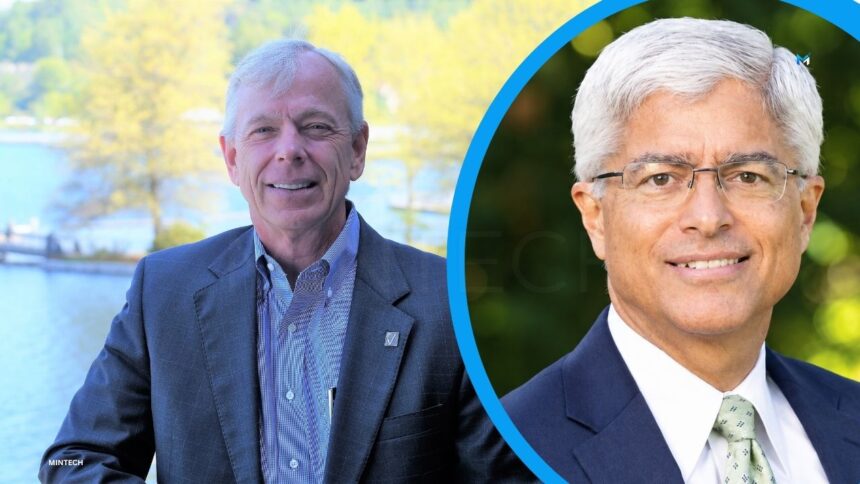
Lowell McAdam and Pedro Pizarro lead, or once led, two industries that people rely on every single day. McAdam guided Verizon through years of rapid wireless growth, while Pizarro now runs Edison International, the parent company of Southern California Edison. One built his career in telecommunications, the other in energy, yet both climbed through decades of technical and operational roles before reaching the chief executive seat.
We built this article from official company profiles and reliable reference sources, so the titles, dates, and degrees you read here rest on confirmed facts. Where public records stay silent, we say so instead of guessing. Along the way, we compare how each executive grew inside large organizations, handled leadership transitions, and contributed to industry groups beyond his own company.
Quick Bio Lowell McAdam and Pedro Pizarro
| Attribute | Lowell McAdam | Pedro Pizarro |
|---|---|---|
| Full Name | Lowell Clayton McAdam | Pedro J. Pizarro |
| Date of Birth | May 28, 1954 | – |
| Birthplace | Buffalo, New York, USA | – |
| Nationality | American | – |
| Education | Engineering degree from Cornell University; MBA from University of San Diego | Bachelor’s in chemistry from Harvard University; Ph.D. in chemistry from Caltech |
| Profession | Business executive | Business executive |
| Company | Verizon Communications | Edison International |
| Industry | Telecommunications | Electric utilities and energy |
| Joined Company | 2000 | 1999 |
| CEO Tenure | August 2011 to August 2018 | October 2016 to present |
| Predecessor | Ivan Seidenberg | Theodore F. Craver Jr. |
| Current Role | Retired from Verizon; Cornell Trustee Emeritus | President and CEO of Edison International; board member at 3M |
| Known For | Leading Verizon through its wireless-driven growth era | Leading Edison International and Southern California Edison |
| Previous Experience | U.S. Navy Civil Engineer Corps, Pacific Bell, AirTouch, PrimeCo | McKinsey & Company, Edison Mission Energy, Southern California Edison |
| Industry Roles | Past chairman of CTIA, the wireless association | Former chair of Edison Electric Institute and Electric Power Research Institute |
Early Life and Family Background of Lowell McAdam
Lowell Clayton McAdam was born on May 28, 1954, in Buffalo, New York, a hardworking city with deep industrial roots. Public biographies share few details about his parents or childhood, so this article sticks to confirmed facts. What the record does show is a practical, technical mindset that appeared early. He chose engineering for his college studies, then served six years in the U.S. Navy’s Civil Engineer Corps before moving into business.
Beyond his Navy years, McAdam became a licensed professional engineer, a credential that reflects hands-on technical skill rather than purely financial training. He later returned to his alma mater in a different role, serving as an emeritus member of the Cornell University Board of Trustees. He has also served as a director of the National Academy Foundation and as co-chair of the CEO Council on Health and Innovation.
Read More Hans Vestberg and Mario Gabelli: Exploring Their Careers and Financial Influence
Early Life and Family Background of Pedro Pizarro
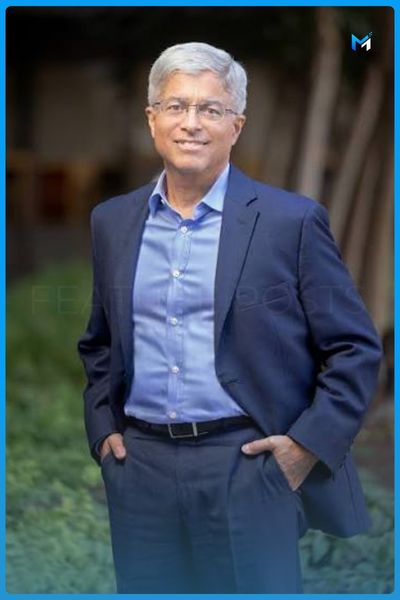
Official profiles reveal little about where Pedro Pizarro was born or how he spent his childhood, and he keeps his family life private. This article therefore focuses on the facts the record supports. What stands out is his academic strength. He earned his bachelor’s degree in chemistry at Harvard University and then pursued a doctorate in chemistry at the California Institute of Technology. During that doctoral work, he held graduate fellowships from the National Science Foundation and the Department of Defense.
That scientific start shaped how Pizarro approaches problems. Chemists learn to test assumptions, measure results, and change course when the data demands it. Those habits translate well to a business facing complex technical, regulatory, and environmental questions. After his studies, he did not stay in the laboratory. He moved into consulting, where he learned to break large challenges into manageable parts and to communicate clearly with senior executives.
Education and Academic Foundations
McAdam earned a bachelor’s degree in engineering from Cornell University, one of the leading engineering schools in the United States. He later completed an MBA at the University of San Diego, which added financial and management skills to his technical foundation. This pairing proved powerful in telecommunications, where leaders must understand networks and balance sheets at the same time. His time in the Navy’s Civil Engineer Corps added practical lessons that no classroom can fully provide. .
Pizarro’s education leans toward pure science. He holds a bachelor’s degree in chemistry from Harvard University and a Ph.D. in chemistry from Caltech, where fellowships from the National Science Foundation and the Department of Defense supported his research. Caltech trains students to think deeply, question assumptions, and solve problems with evidence. Those skills matter in the energy sector, where reliability, safety, and clean power goals all compete for attention.
Lowell McAdam Career Path at Verizon
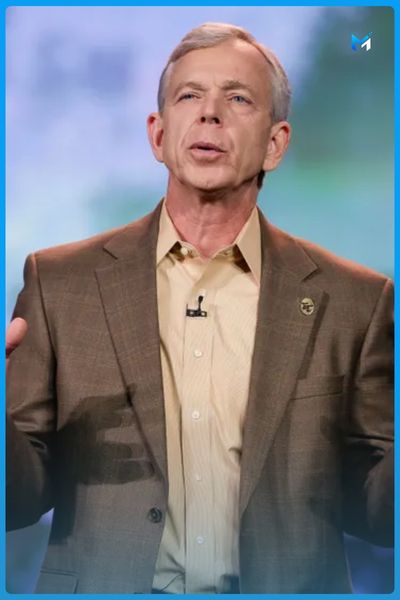
McAdam spent the early part of his career at Pacific Bell, where he worked from 1983 to 1993 in several executive roles, including area vice president of Bay Area marketing. In 1993, he joined AirTouch, first leading international applications and operations and later serving as vice president of international operations. He then became chief executive of PrimeCo Personal Communications, a wireless joint venture of Bell Atlantic and Vodafone AirTouch. This sequence gave him experience in marketing, international operations, and running a company.
Inside Verizon, McAdam took charge of the wireless business. From 2006, he served as chief operating officer and then chief executive of Verizon Wireless, the part of the company that drove much of its growth. On October 1, 2010, he became president and chief operating officer of Verizon Communications, succeeding Ivan Seidenberg in that role. Each step widened his responsibility from one business unit to the entire company.
Pedro Pizarro Career Path at Edison International
Before joining Edison International in 1999, Pizarro worked at McKinsey & Company in Los Angeles, where he served as a senior engagement manager. Consulting gave him a wide view of how large organizations solve strategic problems. At Edison, he moved to Southern California Edison in 2001 and advanced through several leadership roles. In 2011, he became president and chair of the board of Edison Mission Energy, a role he held until the company sold its assets to NRG Energy in April 2014.
After the Edison Mission Energy sale, Pizarro returned to Southern California Edison as president in October 2014 and held that role until May 2016. Running the utility gave him direct responsibility for the service that millions of customers depend on every day. That experience prepared him for the parent company’s top job. His career pattern is clear: he moved between consulting, power generation, and regulated utility operations, building a broad view of the energy business.
Rise to the CEO Position
McAdam’s path to the top began on October 1, 2010, when he became president and chief operating officer of Verizon Communications. He took over as chief executive on August 1, 2011, and he became chairman in January 2012. The board trusted him because he had already led the company’s most important business, Verizon Wireless. Succeeding Ivan Seidenberg, a long-serving leader, was no small task. McAdam responded by keeping the company focused on network quality and wireless growth.
Pizarro’s promotion came in two steps. Edison International elected him president in May 2016 and chief executive officer in October 2016. That sequence gave the board and employees time to see him in the president’s role before he took full command. By then, he had run Southern California Edison and led Edison Mission Energy, so the company already knew his strengths. He also sits on the Edison International board, which links day-to-day management with oversight.
Leadership Style and Management Philosophy
McAdam’s background suggests a leader who values discipline, engineering rigor, and operational detail. His Navy service and engineering training taught him to plan carefully and to respect the systems that keep complex organizations running. At Verizon, those traits fit a business that depends on reliable networks and heavy infrastructure spending. His career also shows comfort with change, since he moved from Pacific Bell to AirTouch to PrimeCo before joining Verizon.
Pizarro’s training as a research chemist points to an analytical, evidence-based style. His career at Edison also reflects strong industry engagement. He has chaired the Edison Electric Institute and the Electric Power Research Institute, which suggests he values collaboration across the energy sector. He has also served on advisory bodies, including the Secretary of Energy Advisory Board. Those roles show a leader who looks beyond a single company to the health of the entire power system.
Major Achievements and Business Milestones
McAdam’s biggest milestone is his tenure as Verizon’s chief executive, a role he held from August 2011 until his retirement took effect on August 1, 2018. He had announced that decision in June 2018, which gave the company time to prepare. He stayed on as executive chairman through the end of 2018 and remained non-executive chairman until March 2019, with Hans Vestberg taking over leadership. This staged exit helped the company avoid disruption.
Pizarro’s milestones include leading Edison Mission Energy through the 2014 sale of its assets to NRG Energy, running Southern California Edison, and becoming chief executive of Edison International in 2016. He has also held major sector roles, including past chair of the Edison Electric Institute and the Electric Power Research Institute. In addition, he served on the Task Force on Business and Jobs Recovery that advised California Governor Gavin Newsom.
Challenges and Critical Decisions
Every telecom leader faces fierce competition, constant technology change, and heavy investment needs, and McAdam stepped into that environment as chief executive in 2011. Customers expected faster networks, lower prices, and reliable service all at once. Balancing those demands requires disciplined spending and clear priorities. One of his most important decisions was how to hand over power. By announcing his retirement months ahead and staying on as chairman for a transition period, he gave investors and employees confidence.
Utility leaders like Pizarro work under a different kind of pressure. California power companies must keep the grid reliable, meet clean energy goals, and satisfy regulators, all while serving millions of customers. Weather risks, rising electricity demand, and public scrutiny add further complexity. A leader in that position must make careful trade-offs between cost, safety, and long-term investment. Pizarro’s scientific background and his years across generation and utility operations help him weigh those choices.
Influence on the Telecom and Energy Industries
McAdam’s influence extended beyond Verizon through his role as past chairman of CTIA, the wireless industry association. Trade groups like CTIA help companies agree on common priorities, speak with regulators, and shape standards that affect millions of mobile users. Serving as chairman signals that peers respected his judgment and trusted him to represent the whole industry. He also co-chaired the CEO Council on Health and Innovation, which connected business leaders with health policy questions.
Pizarro’s industry influence is equally broad. As a former chair of the Edison Electric Institute, he helped represent investor-owned electric companies on national issues. As a former chair of the Electric Power Research Institute, he supported research on the technologies that will shape tomorrow’s grid. He has also served on the Electricity Subsector Coordinating Council and the Secretary of Energy Advisory Board, where he helped connect the power industry with federal policymakers.
Board Roles and Public Recognition
Pizarro’s official profile on the lists his current board roles, including Edison International and 3M, along with his past service with Caltech and Argonne National Laboratory. It also records his work on the Task Force on Business and Jobs Recovery. These appointments show how organizations value his judgment on energy, technology, and economic recovery. Because board memberships and titles change over time, readers should check that page for the latest information before citing it.
McAdam’s public profile also reflects respect from academic and industry groups. According to his Wikipedia biography, he is an emeritus member of the Cornell University Board of Trustees, a past chairman of CTIA, and a director of the National Academy Foundation. Those roles reflect a lasting commitment to education and industry leadership after his Verizon tenure ended. They also show how senior executives often continue contributing through boards and nonprofit work long after they leave day-to-day management.
Leadership Lessons for Aspiring Professionals
McAdam’s career teaches the value of range and operating experience. He moved through Pacific Bell, AirTouch, PrimeCo, and Verizon, learning marketing, international operations, and wireless management along the way. Aspiring leaders can follow that example by taking assignments that stretch their skills, even when the role looks lateral. His engineering and Navy background also shows that technical grounding can strengthen business judgment. Finally, his planned exit demonstrates that great leaders prepare their successors. If you want to reach senior management, build credibility in the core business, learn how money flows through the company, and treat succession as part of your job. Those steps work in almost any industry.
Pizarro’s career offers a different set of lessons. His path from research chemistry to consulting to utility leadership proves that careers do not have to follow a straight line. He also shows the power of industry involvement, since his roles at the Edison Electric Institute and the Electric Power Research Institute expanded his influence.
Legacy and Impact on Global Business
McAdam’s legacy rests on his role in Verizon’s wireless-driven era and on a thoughtful leadership handoff. He took a company with deep roots in wired telephone service and kept it focused on mobile networks, which became central to modern life. His industry leadership at CTIA and his work in education and health initiatives add to that record. Younger executives can study his career as a model for combining technical knowledge with business discipline.
Pizarro’s story is still unfolding, but its outline is already clear. He leads one of the largest electric utility holding companies in the United States at a time when energy systems face rapid change. His scientific training, his experience across generation and utility operations, and his many sector leadership roles give him a strong platform.
Explore More Who Is Dana York? Everything to Know About Tom Petty’s Wife
Conclusion
Lowell McAdam and Pedro Pizarro came from different fields, yet their careers share important themes. Both started with strong technical education, spent years building experience inside large organizations, and reached the top through steady results. McAdam combined engineering, Navy service, and wireless operations to lead Verizon through a pivotal era. Pizarro combined chemistry, consulting, and utility management to lead Edison International.
Before you cite any title or board role from this article, check the official company pages, because corporate positions change often. We built this guide from Edison International’s profile and other reliable references so you can trust the core facts.
Frequently Asked Questions
Who is Lowell McAdam?
He is a former Chairman and CEO of Verizon Communications. He led Verizon as CEO from August 2011 until August 2018.
Who is Pedro Pizarro?
He is the President and CEO of Edison International, the parent company of Southern California Edison. He became CEO in October 2016.
Where was Lowell McAdam born?
He was born on May 28, 1954, in Buffalo, New York.
What did Pedro Pizarro study?
He earned a bachelor’s degree in chemistry from Harvard University and a Ph.D. in chemistry from Caltech.
What did Lowell McAdam study?
He earned an engineering degree from Cornell University and an MBA from the University of San Diego.
Stay More Update MINTECH