
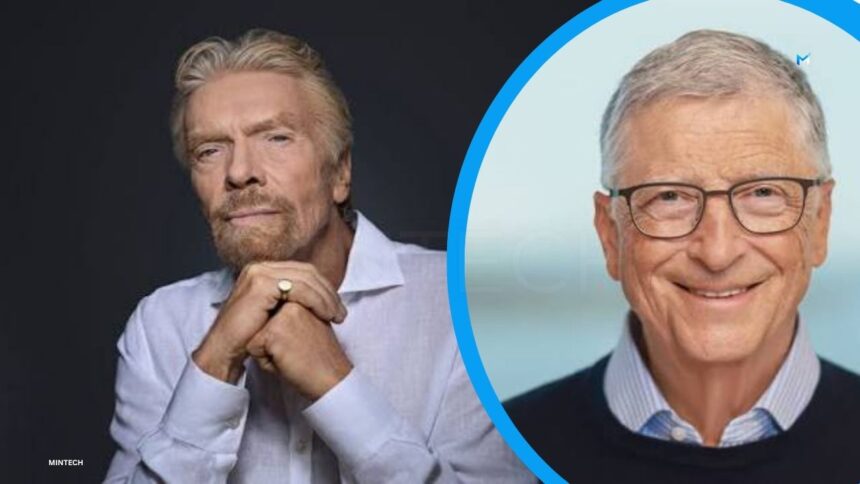
Richard Branson and Bill Gates are two of the most recognized entrepreneurs in the world, yet they built their reputations in very different ways. One turned a youth magazine into the Virgin Group, while the other co-founded Microsoft and later led one of the largest charities on Earth. This guide explains who they are, what they achieved, and what is new in 2026.
Each section stays factual and easy to follow, covering their early lives, careers, leadership styles, philanthropy, and practical lessons you can use yourself. We do not claim any formal partnership between them, so we compare their paths side by side and note shared values where sources support them.
Quick Bio Richard Branson and Bill Gates
| Detail | Richard Branson | Bill Gates |
|---|---|---|
| Full Name | Sir Richard Charles Nicholas Branson | William Henry Gates III |
| Popular Name | Richard Branson | Bill Gates |
| Born | July 18, 1950 | October 28, 1955 |
| Birthplace | Surrey, England | Seattle, Washington |
| Nationality | British | American |
| Education | Left Stowe School at age 16 | Attended Harvard University (left to build Microsoft) |
| Profession | Entrepreneur, investor, and adventurer | Technologist, investor, and philanthropist |
| Main Organization | Virgin Group (founder) | Microsoft (co-founder) and the Gates Foundation (chair) |
| Career Start | Began with a youth magazine, then moved into music retail and records | Co-founded Microsoft in 1975 |
| Key Milestone | Launched Virgin Atlantic in 1984 and flew to space in 2021 | Helped make Microsoft a leader in personal computer software |
| Current Role | Founder of the Virgin Group | Chair of the Gates Foundation |
| Known For | Bold brand building and adventurous publicity | Windows, Office, and large-scale global health giving |
| Approach to Success | Risk-taking, fun, and customer-focused brands | Analytical, data-driven, and long-term thinking |
| Philanthropy | Charity work through Virgin Unite | Gates Foundation plans to spend $200 billion by 2045 |
| Public Profile | Highly visible, media-friendly, and often at events | Highly visible through books, interviews, and his blog |
Who Is Richard Branson

Sir Richard Branson is a British entrepreneur, investor, and adventurer best known as the founder of the Virgin Group. Born on July 18, 1950, in Surrey, England, he left Stowe School at sixteen and never pursued a traditional university path. Over the following decades, he built a global brand that stretches across travel, music, health, telecommunications, and space exploration. Business media often describe the Virgin Group as a conglomerate of hundreds of companies.
Branson also stands out because he treats branding as storytelling. Virgin companies usually challenge a large, comfortable competitor by promising better service, fairer prices, and a more playful attitude. He often speaks about dyslexia and how it pushed him to hire talented people and simplify ideas. In 2026, he remains active as a founder, speaker, and investor, and he continues to share advice on entrepreneurship with younger audiences.
Read More Derek Jeter and Gail Boudreaux: A Complete Guide to Two Remarkable Careers
Richard Branson’s Early Life and Virgin Beginnings
Branson grew up in Surrey in a family that encouraged independence and curiosity. His father worked as a barrister, and his mother supported the household and often pushed her children to try new challenges. At school, Branson struggled with traditional lessons, partly because of dyslexia, yet he showed energy and imagination outside the classroom. At sixteen, he left Stowe to launch a youth magazine called Student, which gave him early lessons in selling advertising, persuading famous writers, and managing deadlines.
From the magazine, Branson moved into mail-order records and later opened a Virgin record shop in London. The business grew fast because young customers wanted lower prices and a relaxed store atmosphere. He then created the Virgin Records label, which released Mike Oldfield’s Tubular Bells and gave the company a major early hit. Those years taught him that culture, timing, and trust in creative people can matter as much as capital. They also shaped the Virgin brand, which became associated with youth, rebellion, and fun.
How Richard Branson Built the Virgin Group
Branson launched Virgin Atlantic in 1984, taking on established airlines with a fresh approach to service and style. Passengers noticed the entertainment, friendly crews, and distinctive branding, and the airline soon earned a loyal following. He later expanded into mobile phones, rail, fitness, banking, and other sectors, often by partnering with experienced operators. Rather than owning everything, Virgin frequently licensed its brand and shared ownership, which limited risk and sped up growth.
Branson also invested in space tourism through Virgin Galactic, which aims to carry paying customers beyond the atmosphere. He flew aboard a Virgin Galactic craft in 2021, a moment that drew global attention to the company. More recently, the Virgin Group has explored new ventures, including a reported fundraise to challenge Eurostar on cross-Channel rail routes. Each project follows a familiar pattern, because Branson looks for industries with unhappy customers and entrenched incumbents.
Richard Branson’s Leadership Style and Adventures
Branson leads with optimism, curiosity, and an unusually open approach to people. He often says that he listens first, takes notes constantly, and delegates to talented managers rather than controlling every detail. He also believes that employees who feel valued will treat customers better, which is a core idea behind Virgin’s service culture. His informal dress, willingness to joke about himself, and visible presence at launches reinforce that message. Critics sometimes argue that his stunts overshadow business results, yet supporters say the publicity helps Virgin compete against rivals with far larger advertising budgets and stronger corporate reputations, and that visibility keeps the brand personal in an age of faceless corporations.
His adventures became part of the brand. Branson attempted record-breaking sea crossings and hot air balloon flights in the 1980s, and he later promoted space travel as the next frontier. He also supports charitable work through Virgin Unite and has been involved with global leadership initiatives. In July 2026, Fortune reported that he warned readers that copying his 5 a.m. routine would not guarantee success, which shows how he encourages people to find their own habits.
Who Is Bill Gates

Bill Gates is an American technologist, investor, and philanthropist who co-founded Microsoft in 1975. Born on October 28, 1955, in Seattle, Washington, he became one of the world’s best-known business leaders during the personal computer revolution. Microsoft’s software, especially Windows and Office, reached billions of people and shaped how offices and homes use computers. Gates later shifted his attention toward global health, education, and climate challenges, which gave his public image a new focus.
Gates is known for analytical thinking, intense reading habits, and a strong belief in data. He often explains problems with charts, simple numbers, and long-term trends, whether the topic is software or vaccines. As chair of the Gates Foundation, he works with a CEO and board to guide spending on health and development. He also invests in energy and technology projects and shares ideas through public writing. Because his career spans business and philanthropy, he offers a useful contrast to Richard Branson, whose public identity centers on brands, adventures, and entrepreneurship.
Bill Gates’ Early Life and Microsoft Journey
Gates grew up in Seattle in a comfortable, education-focused family, and he showed early talent in math and computing. At Lakeside School, he gained rare access to a computer terminal, which allowed him to write programs as a teenager. There he met Paul Allen, who became his partner and later co-founder at Microsoft. Gates entered Harvard University in 1973, but he spent much of his time on computing and soon left to pursue a business opportunity.
Gates and Allen founded Microsoft in 1975 to write software for early personal computers. The company grew rapidly after it provided the operating system for IBM’s PC platform and later launched Windows. Microsoft went public in 1986, and Gates became a billionaire at a young age. He served as CEO until 2000, when he stepped aside from the top operating role, and he continued in other leadership roles for years afterward.
Bill Gates’ Philanthropy and the Gates Foundation
Gates and his then-wife Melinda launched what became the Gates Foundation in 2000, the same year he stepped down as Microsoft CEO. Melinda French Gates left the foundation in 2024, three years after the couple’s divorce, and Bill Gates continues as chair. The foundation focuses on global health, poverty, and education, funding vaccines, disease research, and agricultural programs. In May 2025, Gates announced that the foundation would spend about 200 billion dollars over twenty years and then close in 2045.
In January 2026, the foundation approved a record 9 billion dollar budget for the year, according to a Fortune report, while also cutting staff positions as part of its wind-down plans. Supporters praise its scale and focus on child health, whereas critics question the influence of a single wealthy donor and the effects of shrinking global aid. Gates has also warned that child deaths rose for the first time this century, from 4.6 million in 2024 to 4.8 million in 2025.
Key Differences Between Richard Branson and Bill Gates
Branson and Gates built their influence through very different tools. Branson relies on brand storytelling, partnerships, and a willingness to enter crowded industries with a playful challenger identity. Gates relied on software, technical depth, and large-scale distribution, which let Microsoft become a standard in everyday computing. Branson often manages a portfolio of separate companies, whereas Gates built one dominant company before shifting to philanthropy.
Their public personas also contrast. Branson appears relaxed, adventurous, and customer-friendly, and he often uses humor and personal stories to explain business ideas. Gates comes across as analytical and serious, and he prefers data, reports, and structured arguments. Branson’s wealth comes from a web of brands and stakes, while Gates’s fortune came largely from Microsoft shares and investments. Today, Branson focuses on entrepreneurship and Virgin ventures, whereas Gates concentrates on funding global health and development.
Shared Values and Common Ground
Despite their contrasts, Branson and Gates share several important traits. Both left formal education early to pursue business, since Branson left school at sixteen and Gates left Harvard to build Microsoft. Both started companies in the 1970s and bet on emerging trends, whether that was youth music culture or personal computing. They also learned to hire strong teams, because neither could manage every detail alone. Each man built a global brand, and each treats reputation as a valuable asset that requires care.=
Both also turned part of their influence toward social causes. Branson supports charity and leadership initiatives through Virgin Unite and related work, while Gates directs most of his resources through the Gates Foundation. Each speaks publicly about global problems, from health to the environment, and each encourages business leaders to think beyond profit. They also share resilience, because both faced criticism, setbacks, and difficult periods. Gates endured antitrust battles and public controversy, and Branson saw some ventures struggle or close. Readers can learn from this mix of confidence and persistence without copying every decision, since success always involves luck, timing, and context as well, and those qualities matter when conditions become difficult.
Latest Updates on Richard Branson and Bill Gates in 2026
For Gates, 2026 has focused on philanthropy. In January, the Gates Foundation announced a record 9 billion dollar budget and plans to cap operating costs while trimming staff. In February, CEO Mark Suzman released an annual letter that outlined the foundation’s long-term goals and warned about reversals in global health progress. In September, the foundation committed at least one billion dollars over two years to expand access to artificial intelligence for people who often miss out on new technology. These updates show how Gates now applies his business mindset to global development and emerging technology, and they also show how quickly large charities adjust to changing needs and budgets.
For Branson, 2026 has focused on business and advice. Virgin Atlantic named a new chief executive, Corneel Koster, to start in January, after Branson publicly confirmed the change in October 2025. In August, City AM reported that Branson urged Britain to support founders who could build the next Virgin. In October, he appeared at the Startup Venezuela Summit in Caracas, where reports said he tied foreign investment to transparent elections and the rule of law.
Why Richard Branson and Bill Gates Matter Today
Branson matters today because he shows how a founder can build a brand across many industries without owning every part of the business. His emphasis on service, humor, and challenger energy still influences startups that compete against large incumbents. He also remains a visible advocate for entrepreneurship, which helps young founders see risk-taking as a learnable skill. In 2026, he continues to speak about supporting new British companies and exploring fresh opportunities.
Gates matters because his influence now centers on solving large public problems with money, data, and technology. His foundation shapes global health priorities, from vaccines to child survival, and its spending plan will influence aid for years. His emphasis on artificial intelligence access shows how technology leaders think about equity and opportunity. At the same time, critics remind readers that private philanthropy should face public scrutiny and transparency. That balance makes his work an important case study for anyone who studies charity, policy, or global development.
Lessons Readers Can Learn from Both Billionaires
First, start before you feel ready, because Branson launched a magazine as a teenager, and Gates left Harvard to build Microsoft, which shows how action can teach more than waiting. You can copy that habit by starting a small project this month. Second, build a strong team, because both men relied on talented partners and managers. Third, protect your reputation, since trust helps brands and foundations survive criticism. These habits cost little and apply to almost any career, from startups to nonprofits. Start with one routine this week and measure how it changes your confidence and results, and consistent action beats waiting for perfect conditions, especially when learning matters most.
Fourth, mix passion with analysis. Branson brings energy and storytelling, while Gates brings data and discipline, and together those traits form a balanced approach. Fifth, think beyond profit, because both leaders invest time and money in social causes. Finally, accept that setbacks come with ambition, and learn from them instead of hiding them. Use these lessons as inspiration rather than strict rules, and adapt them to your own goals, budget, and risk tolerance.
Explore More Ray Dalio and Patricia Poppe: Who They Are and Why They Matter
Conclusion
Richard Branson and Bill Gates prove that business success can take many forms. Branson built a playful, global brand through bold ventures and strong storytelling, while Gates built a technology giant and then turned toward philanthropy. Both rely on teams, resilience, and long-term vision.Use their stories as practical inspiration, not as a script. Pick one habit from each of them, test it for a month, and review the results. Keep checking reliable sources, because company plans, charity budgets, and public roles can change quickly.
Frequently Asked Questions
Who is Richard Branson?
Richard Branson is a British entrepreneur and the founder of the Virgin Group.
Who is Bill Gates?
Bill Gates is an American technologist who co-founded Microsoft and now chairs the Gates Foundation.
Are Richard Branson and Bill Gates business partners?
No public source shows a formal partnership. This article compares their careers and shared values only.
What is Richard Branson best known for?
He is best known for building the Virgin brand, launching Virgin Atlantic, and flying aboard Virgin Galactic in 2021.
What is Bill Gates best known for?
He is best known for co-founding Microsoft and later leading large-scale global health philanthropy.
Stay More Update MINTECH